When War Stops Being Heroic
Some war books begin with gunfire. This one begins with fog.
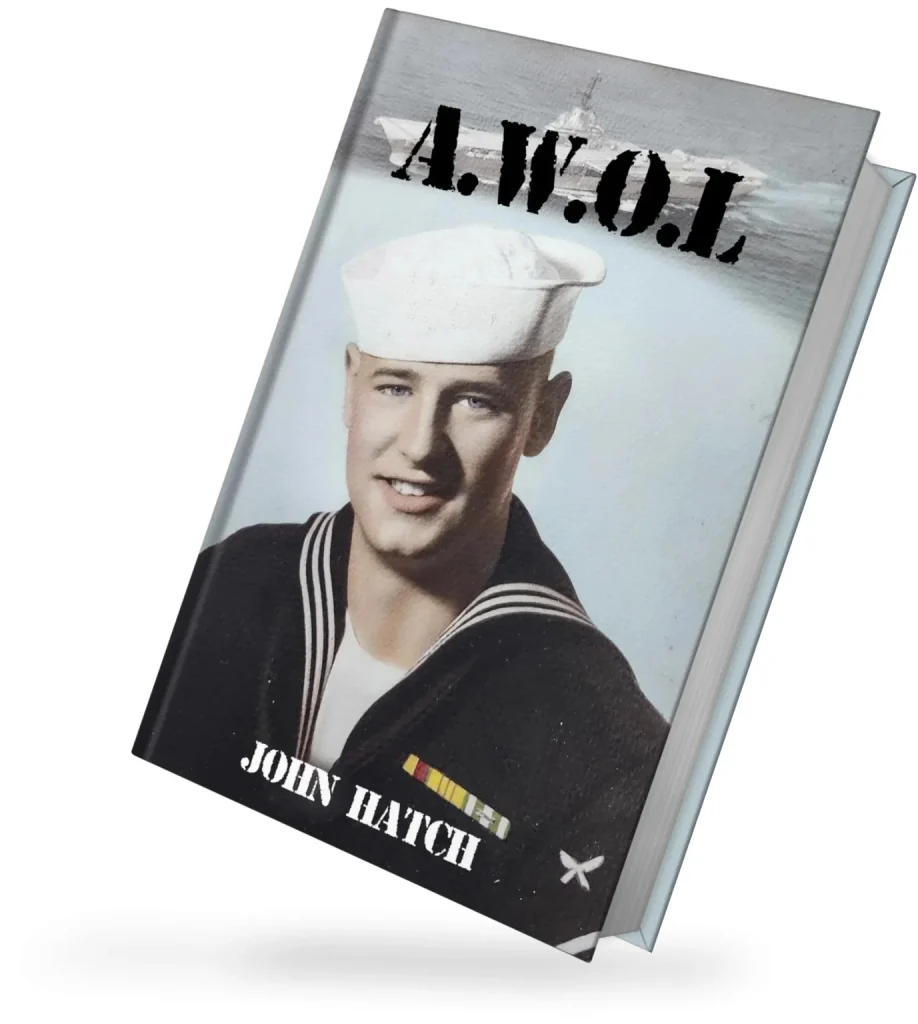
A young sailor stands before the USS Yorktown in Long Beach, staring at a gray ship that seems less like a vessel and more like a warning. The air smells of diesel, salt water, wet concrete, and old docks. He is supposed to report for duty. Instead, something inside him begins to pull away.
That is where the real force of A.W.O.L begins. Not in battle, not in medals, and not in speeches about courage, but in the private moment when a man asks himself what he is truly doing there.
This Vietnam War story is for readers who want more than uniforms and orders. It is about fear, love, guilt, survival, and the painful act of refusing to become numb.
A Journey Rooted in Doubt, Not Glory
Unlike many military fiction works, this Vietnam War story begins with uncertainty. The protagonist is not driven solely by patriotism. He doubts the authority, the cause, and himself.
John Hatch is introspective from the outset. He is poised on the brink of a life he doubts, foreseeing the tragedy before it happens.
An idea in the manuscript sums this up: “War itself is, of course, a form of madness.”
This theme reverberates throughout the novel. It shapes every decision, every doubt, and every turning point.
War Fiction books become less about war itself and more about the cost of believing in it.
The Emotional Core of an AWOL Story
At its heart, this is an emotional unraveling. The protagonist’s decision to go absent without leave is not sudden. It gradually builds through lived experiences, relationships, and internal conflict.
His life before deployment is filled with:
- Love that feels real yet fragile
- Dreams that feel close yet unreachable
- Expectations that feel heavy and unavoidable
These elements create a strong emotional foundation. When the breaking point comes, it feels inevitable rather than surprising.
Author John Hatch didn’t write the story, and does not judge the decision. Instead, it explores the emotional weight behind it.
The Anti-War Message That Stays With You
This anti-war novel does not preach. It shows.
The book presents a powerful anti-war message. With all the experiences, dialogues, and characters’ thoughts, it doesn’t depend on speeches and melodrama.
It truly represents:
- Reflects on fear and doubt
- Realistic portrayals of disillusionment
- Subtle critiques of authority
The message is shown with clarity and truth. Readers arrive at their own conclusions. This approach makes the story more powerful.
The Purpose Behind the Story
A.W.O.L does not treat war like a stage for heroism. It looks at war from the inside, where doubt is private, fear is often hidden, and obedience can feel heavier than courage.
The book was written to give voice to a man trying to understand what he was being asked to become.
He is not rejecting duty for the sake of rebellion.
He is questioning whether duty still has meaning when the cause behind it feels broken.
That is what gives the story its weight. It does not shout against war. It simply follows one person closely enough for the reader to feel the pressure building.