Patriotism has always been a problem: allegiance to a country and conscience. In the era of the Vietnam War, this issue came to a breaking point. Soldiers were presented with orders conflicting with their sense of morality. Citizens were confronted with the question of whether obedience or integrity best represented genuine devotion to the country.
The cost of conscience was paid in split families, lost lives, and tattered reputations. The war tested strategy on the battlefield, on the roles and responsibilities of soldiers. This made young Americans question whether obedience was bravery or treason.
The Responsibility of Soldiers: Beyond the Uniform
Being a servant of a nation requires courage, but moral courage is usually more expensive than sacrifice. Some of the most essential elements of a soldier’s duty are:
- Duty to defend: not only borders, but the ethical basis of the nation.
- Compliance with the order is weighed against the obligation to resist injustice.
- Warfare integrity, where honor is an even more powerful weapon than artillery.
- Strategic vision and moral courage are needed to make decisions in warfare.
In the Vietnam conflict, soldiers often found these principles colliding. The battle wasn’t always on the field; it was inside the mind of every man sent to fight.
Patriotism During the Vietnam War
What defined patriotism in the 1960s wasn’t a flag-waving crowd; it was the individual who dared to think. Many believed service meant silence, that questioning orders equalled treason. Others, including returning veterans, began to see protest as the truest form of loyalty. Young Americans watched the government’s justifications crumble, forcing them to choose between obedience and truth. This was when Patriotism Becomes a Moral Battle, a fight between doing what’s expected and doing what’s right.
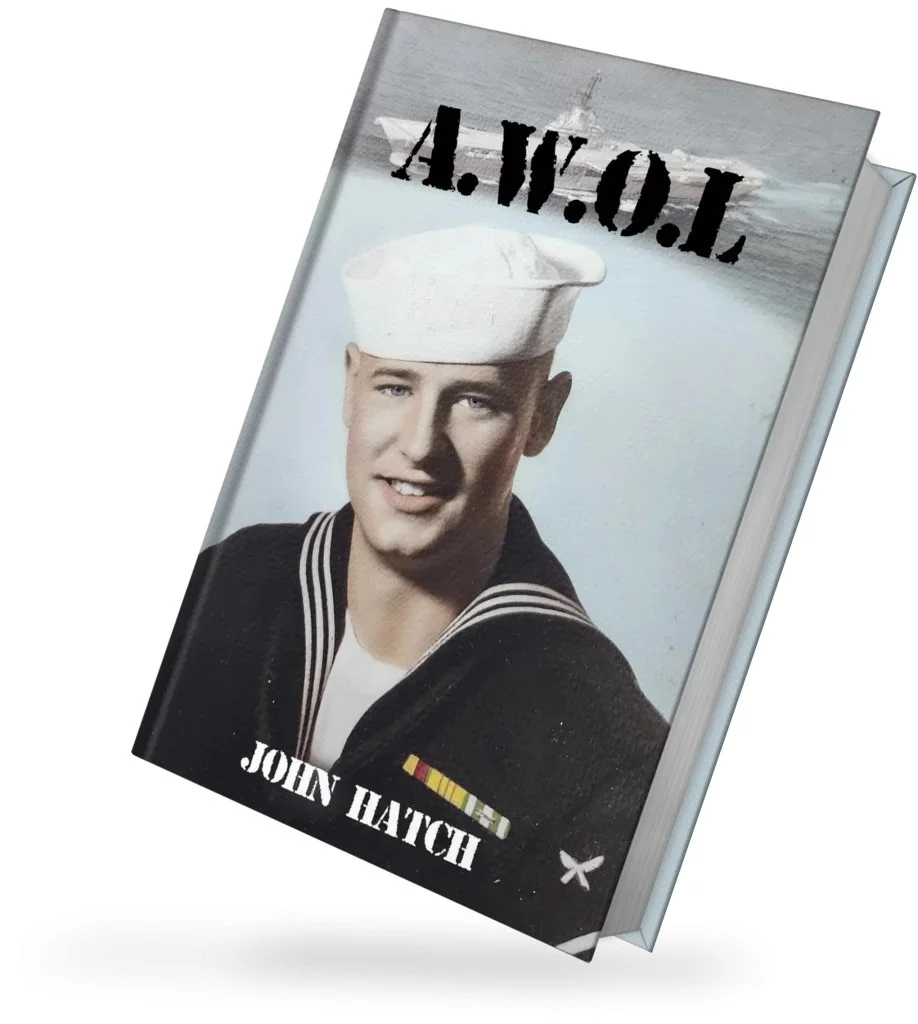
A.W.O.L. by John Hatch: A True Portrait of Conscience
John Hatch’s A.W.O.L. dives deep into this conflict. Set in the Vietnam War era, it follows a U.S. Navy sailor who abandons his post, not from cowardice, but from awakening. He understands that integrity without loyalty is useless. The story in this book shows the true nature of the cost of conscience, how a man’s moral accounting is a mirror of the problems in the nation.
- Hatch’s story is a democracy sermonizing and duplicating.
- His desertion is an ultimatum to find moral footing in a system gone adrift.
- Through his interactions, he delves into what it means to fight for a cause that no longer feels righteous.
It is read like a confession: raw, unedited, and painfully truthful. It asks whether a soldier’s responsibility ends with his orders or begins with his conscience.