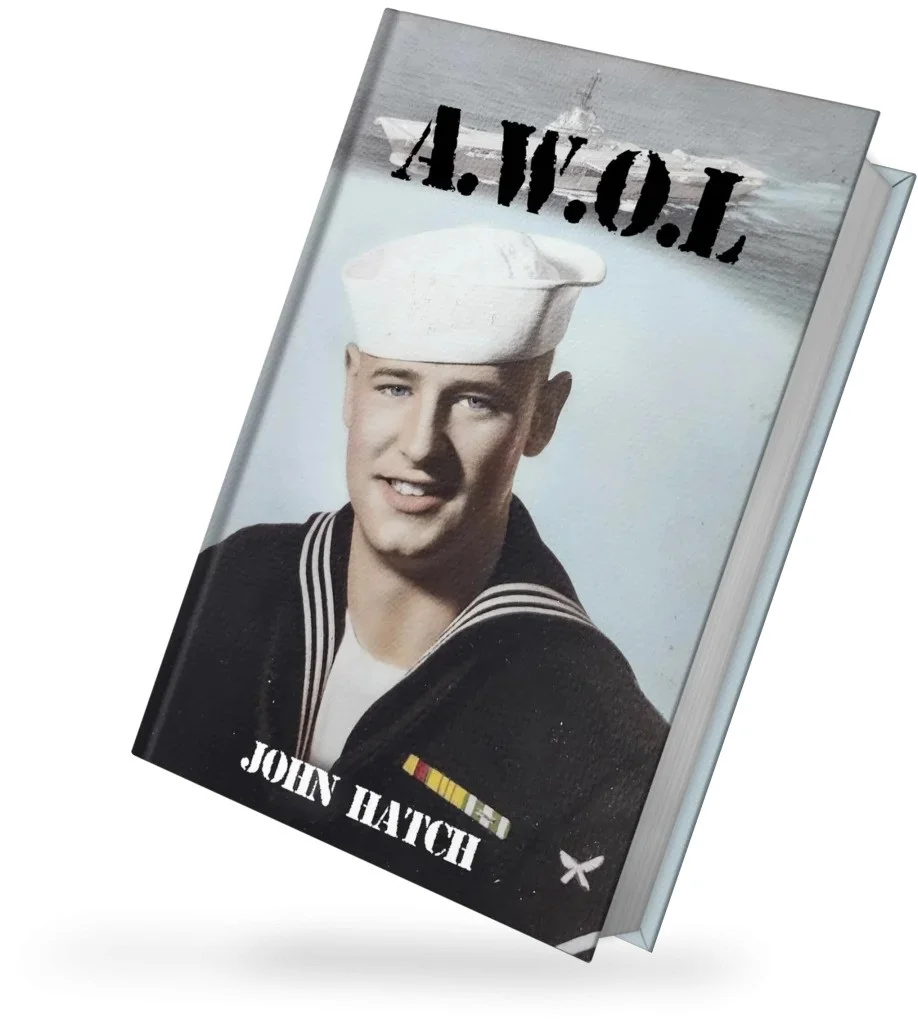
People have traditionally considered war to be a vital part of national security, a method to safeguard freedom, and a sign of patriotism. But behind all that talk comes a grim fact that many military personnel only learn about when they are in the middle of a war. The Immorality of War is not only a philosophical statement; it is something that those who have been to war and come back transformed will always remember. John Hatch’s captivating Vietnam War memoir, A.W.O.L., is a dramatic illustration of this disillusionment. It shows how war frequently takes away people’s humanity, choice, and clarity.
This blog looks at the big-picture concerns that arise when soldiers have to make tough decisions about right and wrong. It does this by utilizing Lessons from a Disillusioned Sailor to talk about the legacy of the anti-Vietnam War movement, conscientious objection, and the Vietnam protest period. It illustrates how moral thinking and resistance still shape people’s views on war today. A.W.O.L. is a vital book on the Vietnam War because it discusses topics that many would rather avoid.
The Sailor’s Dilemma: When Duty Conflicts With Mortality
People frequently think that joining the military is a selfless gesture of allegiance to one’s nation. Young men in the Vietnam War were taught that it was proper, respectable, and important to serve. But many examples, like Hatch’s, show how fast that idealism goes away when you have to face the brutality and horror that war brings.
In the Vietnam War, troops were told to murder, destroy, and control a populace that many of them didn’t even know. As a consequence, there was a tremendous divide between personal morals and military orders. This conflict is what makes the immorality of war what it is. When a sailor or soldier understands that obedience necessitates moral compromise, the internal conflict may be as detrimental as the outward one.
Hatch’s adventure in A.W.O.L. shows that wearing a uniform doesn’t make you less human. He shows how wartime systems force people into jobs that go against their principles, making ordinary people part of the destruction. His inability to accept that contradiction shows how many others felt but were penalized for admitting it.
The Rise of Conscientious Objection & Moral Resistance
During the Vietnam War, people’s opinions of war altered. People and service members alike began to doubt the idea that completing your job in the military is always the right thing to do or the greatest thing for the nation. Conscientious objection became a significant form of ethical dissent, driven by people who could not reconcile participation with their personal beliefs.
People who didn’t want to serve were generally called cowards or criminals. But many others who didn’t agree said the reverse. It took a lot of bravery to refuse to hurt innocent people. Hatch’s choice to go A.W.O.L., which he talks about in his biography, was a decision to uphold his conscience, not to avoid responsibility.
Historians now agree that these objectors changed the way people spoke about things in America, making society face a painful fact. A fair system can’t be built on blind compliance. If war necessitates the abandonment of morals, then the framework that mandates such sacrifice warrants examination.
Anti-Vietnam War Movement: A Nation Challenges Its Own Conscience
While troops fought with one another, the civilian community spoke out against them in public. The anti-Vietnam War protests, which ranged from peaceful gatherings on college campuses to forceful political demonstrations at national monuments, were some of the biggest anti-war movements in modern history. This extraordinary burst of protest showed that many people disagreed with the government’s choices.
The anti-Vietnam War movement demanded accountability from those who were corrupt, used violence without justification, and misled the people. Activists asserted that the fight was not for freedom but rather for political power and a fear-based ideology. During this time, soldiers who were unhappy with the war joined their voices, giving personal accounts of its moral shortcomings. Their honesty broke down what the media said about them and made people confront the violence happening in other countries.
Lessons from a Disillusioned Sailor shows us that throughout the Vietnam War, people had to speak up when their government did things that went against its stated beliefs.
The Human Cost: Trauma, Silence, & Lost Identity
The figures illustrating the costs of war may not provide a complete picture. Every fatality is only a number in a report. It is believed that all veterans who return will integrate harmoniously. But the psychological wounds left by the immorality of war linger long after ceasefires or agreements.
This incident is a fantastic illustration of what Hatch’s memoir is about. When soldiers like him came home, they carried with them feelings of trauma, guilt, and loneliness. Many people had to stay silent because other people either ridiculed them or decided to ignore the reality instead of facing it. Their anguish reveals that war kills innocent people on both sides, taking away the basic dignity of both troops and civilians.
The sad legacy of Vietnam will always be a reminder to future generations that even those who survive conflict lose parts of themselves that can never be replaced.
Why These Lessons Still Matter
New kinds of conflicts are still happening all across the globe today. Even while technology
becomes better, combat is still based on the same moral conflicts. When we reduce human lives to strategic calculations and create an atmosphere of fear that justifies brutality, moral dilemmas persist.
Thinking about the Vietnam War and the realities in A.W.O.L. may help save society from making the same errors again. War should never be made commonplace. Celebrating violence as heroic may quiet those who think that moral obligation is more important than patriotic duty.
It is clear that war is immoral whenever:
- Soldiers are compelled to engage in behaviors that violate their moral principles.
- Governments lie to the people to make violence seem acceptable.
- People who disagree are punished instead of being appreciated.
People are willing to give up their lives for power.
Conclusion: A Call To Listen to the Disillusioned
People frequently say that war is essential, noble, and unavoidable. But the Lessons from a Disillusioned Sailor tell a different story that is based on morals and compassion. Hatch’s A.W.O.L. is one of the finest Vietnam War memoir books, showing the courage of those who questioned orders. It adds to the legacy of the anti-war Vietnam movement by telling future generations to never stop contemplating what is right and wrong in times of crisis.
The most important thing his book says is that real patriotism doesn’t mean being blindly loyal. It requires you to be honest. It takes bravery to stand out for what is right when acts go against basic human morals. The anti-war protests of the Vietnam era were not simply political acts. They were a rebellion of the mind.
FAQs
Why do some soldiers believe war is immoral?
Soldiers may view war as immoral due to the harsh realities of violence, suffering, and loss and may question whether conflict goals justify the human cost, leading to ethical dilemmas.
What makes a war just or unjust?
Just wars, which are based on morally acceptable grounds, respect international norms, have clear goals, and do the least damage to civilians. Unjust wars, on the other hand, are based on aggression, personal gain, prejudice, or ideology and do a lot of harm.
How did soldiers protest or resist the Vietnam War?
American soldiers who didn’t follow instructions, applied for conscientious objector status, and took part in rallies against the Vietnam War showed how the military’s practices were becoming more and more at odds with their views.
Is opposing war unpatriotic?
People who care deeply about their country, cherish human life, want diplomatic solutions, or agree with national ideals may be against war. Questioning choices may also safeguard the country.
Can war ever be morally justified?
The moral justification of war is contingent upon ideas, ethics, and the definition of conflict. Some say that severe events make it acceptable, while others say that the damage of war is worse than any reason.