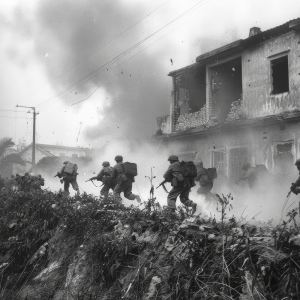
Over many years, all generations face moments that happen to make generations understand the difference between right and wrong. For Americans, the 1960s were that difficult. It was a decade of rebellion, reflection, and reckoning.
Many still trusted authority, but young people began to question it. From protests on college lawns to the muddy fields of Woodstock, a generation demanded to know: What does it mean to be American when the nation itself feels lost?
THE REBELLION ROOTS
Decade of the Vietnam War era did more than divide families; it fractured the moral heart of the United States. Major forces driving this cultural split were:
Government distrust:
The Vietnam conflict revealed deceit at the upper echelons of government.
Media coverage:
Television brutality, for the first time, brought war into living rooms.
Youth rebellion:
Young people would not take up their parents’ silence, questioning government intent as well as social conformity.
Civil rights movements:
Concurrent struggles against racism and sexism. Further exposed Americans to awareness of hypocrisy in American democracy.
These all combined to fuel what would later be referred to as the 1960s counterculture movement, a moral rebellion that resonates with the nation’s psyche to this day.
THE RISE OF THE HIPPIE MOVEMENT
What was the hippie movement 1960s? More than a style, it was a rejection of militarism and materialism. Based on peaceful, loving, and ideals, the hippie culture of the 1960s flourished in urban settings, such as San Francisco’s Haight-Ashbury and Los Angeles’ Sunset Strip.
Core values were:
- Anti-war activism, the quest for peace.
- Shared living, self-reliance.
- Art, music, spiritual experimentation.
- Taking psychedelics to question consciousness and challenge societal norms.
PROTEST CULTURE AND THE MORAL AWAKENING
The 1960s protest culture changed citizenship. Marching and protesting were not only acts of war but also moral acts. These public protests compelled America to view itself differently. This moral awakening reframed patriotism:
- It became patriotic to protest against injustice, not to blindly obey.
- It became moral to oppose war, not to fight it.
- It became courageous to argue, not to conform.
The American Conscience was no longer measured by how loudly one saluted the flag but by how bravely one stood against its misuse.
A.W.O.L. BY JOHN HATCH: A MIRROR TO THE ERA
John’s Vietnam War memoir book shows a reflection of one man as a mirror of the entire generation. It introduces a young Navy sailor who becomes A.W.O.L. after discovering the war’s folly and moral awakening.
Through his journey, we feel the loneliness, self-discovery, and hope that shaped the youth of the 1960s. He encountered the hippie lifestyle, free culture, and anti-war protests. These encounters showed dreams and disappointments of youth.
A.W.O.L. is not just a private autobiography; it’s a national conscience. Hatch’s writing compels us to face uncomfortable realities about war, obedience, and what it means to serve a nation that so often betrays its own values.
PURPOSE BEHIND A.W.O.L.
The author’s purpose in writing A.W.O.L. was not to glorify defiance. He wrote it to understand it. His purpose was to explore the conflict between duty and conscience, between the uniform he wore and the truth he felt.
It mourns the emotional loss, the forgotten promises, and the heavy silence of veterans who came home.
By laying bare one man’s journey from obedience to awareness. Hatch renews the ongoing conversation about the American Conscience and its uneasy peace with power.

WHY THE 1960S STILL DEFINE THE AMERICAN CONSCIENCE
Decades later, the ripples of that era continue to move beneath American culture.
Political disagreement:
Current protests and political movements continue to use the same image and language of 1960s activism.
Cultural freedom:
Fashion, music, and individualism all owe a debt to that rebellious era.
Social justice:
The belief that ordinary people have the power to shape history is one of the 1960s’ lasting legacies.
The Vietnam War era made Americans choose between conscience and compliance in leading the country forward. It’s why the 1960s remain a moral compass, flawed, loud, and essential.
WHAT ENDED THE HIPPIE MOVEMENT?
Like every revolution, idealism met exhaustion. The violence at Altamont, the Manson murders, and drug abuse scandals tainted the dream. Commercialization turned rebellion into fashion. As the Vietnam War wound down, the urgency of protest faded.
Yet, even as it crumbled, the hippie movement of the 1960s left an indelible mark on the American Conscience, proof that questioning authority can be an act of national love.
FOR READERS OF A.W.O.L
If A.W.O.L. stirs something in you, that inner combination of anger, sorrow, and moral certainty, you may also read:
“The Things They Carried” by Tim O’Brien:
A chilling examination of truth and trauma in Vietnamese soldiers.
“Matterhorn” by Karl Marlantes:
Powerful book depicting a young Marine’s reshaping during the War.
Each continues the dialogue that John Hatch began, the struggle between loyalty and integrity.
FAQs
What was the hippie movement of the 1960s?
The hippie movement was a cultural and social uprising against war, consumerism, and conformity that advocated peace, love, and communal living.
What is hippy culture?
Hippy culture is a way of life based on free expression, non-violence, creative experimentation, and harmony with nature.
What ended the hippie movement?
Violence, drug misuse, and commercial exploitation eroded its purity, leading to its decline by the early 1970s.
What was the dark side of the hippie movement?
People who care deeply about their country, cherish human life, want diplomatic solutions, or agree with national ideals may be against war. Questioning choices may also safeguard the country.
Can war ever be morally justified?
Illegal activities like overuse of drugs, no homes, and the exploitation of youths in a vulnerable state have been highlighted.
Why the 1960s still define American Conscience?
Illegal activities like overuse of drugs, no homes, and the exploitation of youths in a vulnerable state have been highlighted.